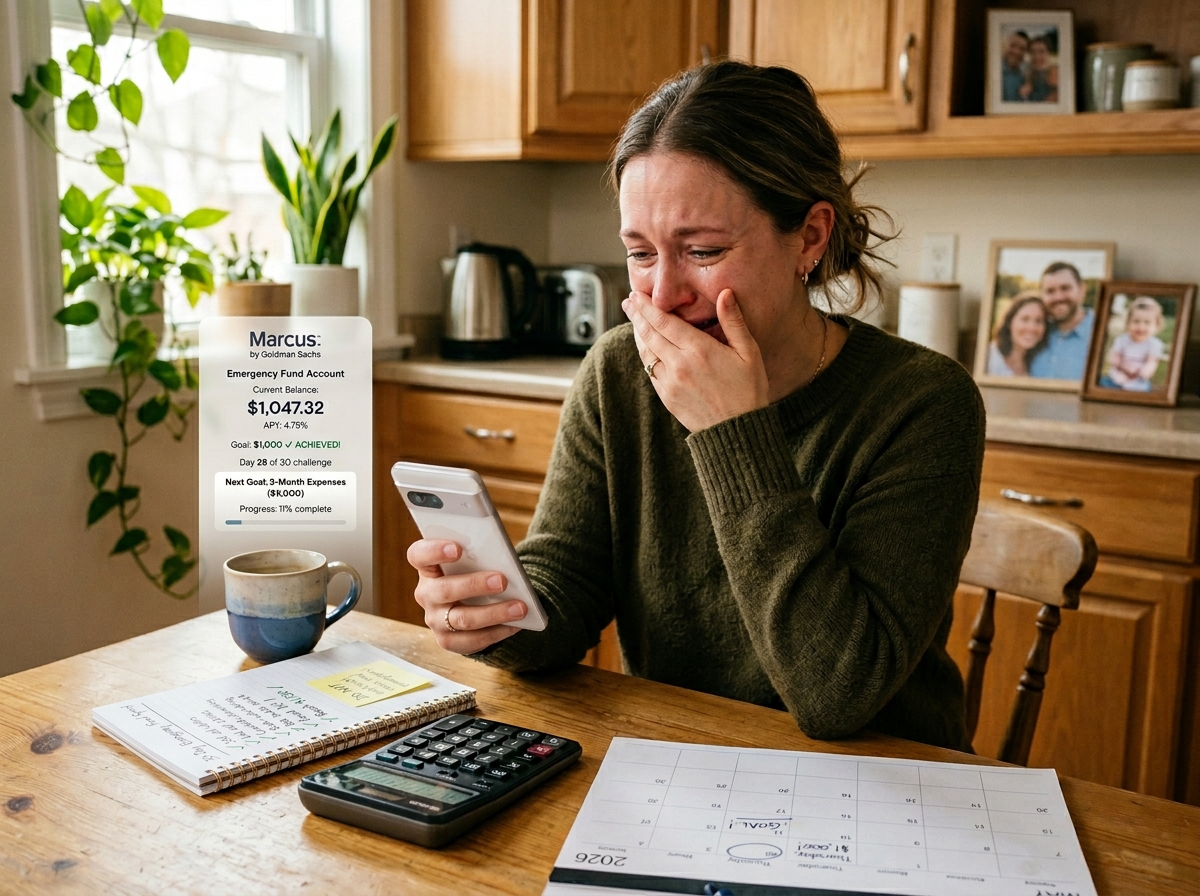
7 Smart Ways to Save for Your Dream Goals in 2026

The State of Savings in 2026: Why Your Strategy Matters More Than Ever
Saving money in April 2026 looks dramatically different than it did just three years ago. Here's what you need to know about the current savings landscape:
The Good News: Interest Rates Are Working FOR You
High-yield savings accounts are paying real returns: After years of near-zero interest rates, HYSAs now offer 4.5-5.2% APY (as of April 2026). This means your $10,000 emergency fund earns $450-520 annually instead of $10. For the first time in 15+ years, savers are winning over spenders.
CDs are competitive again: 12-month CDs offer 5.0-5.5% APY, and 5-year CDs can hit 4.8-5.3%. If you're saving for a house down payment in 3-5 years, locking in these rates guarantees growth while protecting your principal.
Inflation is stabilizing: After peaking at 9% in 2022, inflation has cooled to 2.8% (Q1 2026). This means your savings aren't losing purchasing power as quickly, and your dollar today will be worth more tomorrow than it was in 2023.
The Reality Check: Costs Remain High
Housing costs continue rising: Median rent nationwide is $1,950/month (up from $1,800 in 2023). In major cities like Austin, Seattle, and Denver, expect $2,200-2,800 for a one-bedroom. Buying? The median home price is $385,000, requiring a $77,000 down payment (20%).
Emergency savings are still critically low: According to Bankrate's Q1 2026 survey, 39% of Americans can't cover a $1,000 emergency without borrowing. This is slightly worse than 2023 (37%), showing the lasting impact of inflation years.
The savings gap is real: The recommended 3-6 month emergency fund for someone earning $60,000 annually ($5,000/month) should be $15,000-30,000. Yet the median savings balance for Americans is just $8,000.
Bottom line: 2026 presents a rare opportunity: high interest rates make saving profitable again, but costs remain elevated. The winners will be those who save strategically, automate ruthlessly, and take advantage of today's HYSA rates before they inevitably drop.
Introduction: Your Roadmap to Financial Dreams
Whether it's a $77,000 down payment for your first home, a $8,000 dream vacation to Japan, or a $25,000 emergency fund that lets you sleep at night financial freedom starts with strategic saving.
But here's the challenge: with median rent at $1,950, groceries averaging $480/month, and healthcare premiums hitting $550 for families, how do you save when every dollar is spoken for?
The answer isn't earning more (though that helps). It's about building a system that makes saving automatic, leveraging today's high-yield accounts, and cutting costs without feeling deprived.
This guide shares seven proven strategies for saving toward your biggest goals in 2026. Building on our simple monthly budgeting guide and debt payoff strategies, these steps are designed for real people with real budgets.
With tools like our 5-Step Budget Planner spreadsheet, you'll transform vague wishes into funded realities. Let's start building your dream life, one automated transfer at a time.
Step 1: Define Your Dream Goals with Brutal Clarity
Vague goals like "save more" fail 90% of the time. Specific, measurable goals with deadlines succeed. The difference? Clarity creates commitment.
The Goal-Setting Framework That Works
The 5 W's of Goal Setting:
- What: Exactly what are you saving for? (Not "a house" but "a $385,000 3-bedroom in Denver")
- Why: Why does this matter? (Family stability, dream travel, retirement security)
- When: By what date? (Not "someday" but "June 2029")
- How much: Total cost in 2026 dollars? ($77,000 down payment + $8,000 closing costs = $85,000)
- How much monthly: Divide total by months. ($85,000 ÷ 36 months = $2,361/month)
Real Examples: Turning Dreams Into Numbers
Goal 1: Emergency Fund
- What: 6 months of essential expenses
- Why: Job loss protection, medical emergencies, car repairs
- When: December 2026 (8 months)
- How much: $18,000 (6 months × $3,000 essentials)
- Monthly: $2,250 for 8 months
Goal 2: Dream Vacation
- What: 10-day Japan trip for two
- Why: Celebrate 10th anniversary, experience culture
- When: April 2027 (12 months)
- How much: $8,000 (flights $2,000, hotels $2,500, food/activities $3,000, buffer $500)
- Monthly: $667 for 12 months
Goal 3: Home Down Payment
- What: 20% down on $385,000 median-priced home
- Why: Build equity, stable housing, family roots
- When: May 2029 (36 months)
- How much: $85,000 (down $77,000 + closing $8,000)
- Monthly: $2,361 for 36 months
Prioritizing Multiple Goals
Most people have 3-5 financial goals simultaneously. Here's how to prioritize without feeling overwhelmed:
Priority 1: Emergency fund ($1,000 minimum, then 3-6 months)
Priority 2: High-interest debt (anything over 8% APR)
Priority 3: Employer 401(k) match (free money!)
Priority 4: Short-term goals (1-3 years: vacation, car, wedding)
Priority 5: Long-term goals (3-10 years: house, business, retirement)
Use our 5-Step Budget Planner spreadsheet to list all goals with monthly targets. The built-in goal tracker shows exactly how much to allocate to each.
Pro tip: Focus intensely on ONE goal at a time (after emergency fund). Reaching $8,000 for vacation in 12 months feels better than saving $333/month toward three goals and hitting none.
Step 2: Optimize Your Budget for Maximum Savings
Your budget is the engine that powers savings. Without a clear budget, money disappears into random spending. With a budget, every dollar has a job and savings happens automatically.
The Savings-Focused 50/30/20 Budget (2026 Edition)
Using the 50/30/20 budgeting rule, allocate:
- 50% Needs: Rent/mortgage, groceries, utilities, insurance, minimum debt payments, transportation
- 30% Wants: Dining out, entertainment, hobbies, subscriptions, shopping
- 20% Savings/Debt: Emergency fund, goal savings, extra debt payments, retirement
Sample 2026 Budget: $5,000 Monthly Income
50% Needs = $2,500
- Rent/Mortgage: $1,400 (28% of income - under 30% rule)
- Groceries: $480 (realistic for 2026 costs)
- Utilities: $180 (electric, water, internet)
- Car insurance: $140
- Health insurance (employer subsidy): $120
- Gas/transport: $100
- Phone: $80
30% Wants = $1,500
- Dining out/takeout: $350
- Entertainment: $200 (movies, concerts, events)
- Subscriptions: $80 (Netflix, Spotify, gym)
- Shopping/personal: $270
- Hobbies: $150
- Miscellaneous: $450
20% Savings = $1,000
- Emergency fund: $400 (until 6 months saved)
- Goal savings (vacation): $400
- 401(k) contribution: $200 (4% of income + employer match)
Result: Saving $1,000/month = $12,000/year toward goals. At 5% HYSA interest, that's $12,600 after Year 1!
Adjusting for Different Income Levels
For complete income-specific breakdowns ($30K to $150K), see our budget guidelines with income charts.
$3,000/month income: Save $600/month (20%) = $7,200/year
$7,000/month income: Save $1,400/month (20%) = $16,800/year
$10,000/month income: Save $2,000/month (20%) = $24,000/year
Handling Irregular Income (Freelancers, Gig Workers)
If your income fluctuates between $3,000-7,000 monthly:
- Calculate 6-month average: ($4,000 + $5,000 + $3,500 + $6,000 + $4,500 + $5,000) ÷ 6 = $4,667
- Budget using 80% of average: $4,667 × 0.80 = $3,734
- Save 20% of baseline: $747/month guaranteed
- In above-average months: Save 100% of the extra ($6,000 - $4,667 = $1,333 bonus to savings!)
For detailed irregular income strategies, see our freelancer budgeting guide.
Track every dollar in our 5-Step Budget Planner spreadsheet, which automatically calculates your 50/30/20 split and shows exactly how much to allocate to each goal.
Step 3: Build Your Emergency Fund FIRST (Non-Negotiable)
An emergency fund isn't optional it's the foundation that prevents your savings from collapsing when life happens.
Why Emergency Funds Matter in 2026
Medical emergencies: Average ER visit costs $2,200 (2026). Without insurance, it's $5,000-15,000.
Car repairs: Transmission replacement: $3,500. New tires: $800. Unexpected maintenance averages $1,200/year.
Job loss: Average unemployment duration: 5 months. Without savings, you're forced onto credit cards at 24% APR.
Home repairs: HVAC replacement: $6,000. Roof leak: $1,500. Water heater: $1,200.
The cost of NOT having an emergency fund: Going into $5,000 credit card debt at 22% APR costs you $1,100 in interest if paid off over 12 months. An emergency fund prevents this.
Emergency Fund Target Amounts
| Situation | Target Amount | Why |
|---|---|---|
| Starting Out | $500-1,000 | Covers minor emergencies (flat tire, urgent care) |
| Single, Stable Job | 3 months expenses | Low risk, quick job replacement |
| Family, Dual Income | 3-6 months expenses | More dependents, higher costs |
| Single Income Family | 6 months expenses | High risk if sole earner loses job |
| Self-Employed/Freelance | 6-12 months expenses | Irregular income, no unemployment benefits |
How to Build It Fast
Step 1: Start with $500 - Save $125/week for 4 weeks or $250/paycheck for 2 paychecks
Step 2: Hit $1,000 - Add $100/week for 5 more weeks
Step 3: Build to 3 months - If essential expenses are $3,000/month, save $9,000 total. At $750/month, that's 12 months.
Where to keep it: High-yield savings account for easy access + interest. Don't use checking (too easy to spend) or investments (too risky for emergencies).
Example: Mike, a Denver teacher earning $4,000/month with $2,000 essential expenses, needs $6,000-12,000. He saves $400/month. At $400/month, he hits $6,000 in 15 months. He tracks this in our 5-Step Budget Planner spreadsheet with the emergency fund visual tracker.
For a complete emergency fund strategy, see our guide to building an emergency fund on a tight budget.
Step 4: Automate Savings for Foolproof Consistency
Willpower fails. Automation wins. Set up automatic transfers and you'll save before you have a chance to spend.
The Psychology of Automation
Manual saving: Requires remembering, logging in, transferring. Success rate: 40%.
Automated saving: Happens invisibly on payday. Success rate: 95%.
The difference? Manual saving depends on discipline. Automated saving removes the decision entirely.
How to Set Up Bulletproof Automation
Method 1: Bank Auto-Transfer (Most Reliable)
- Open high-yield savings account (Ally, Marcus, Capital One)
- Link to checking account
- Set recurring transfer for day after payday (e.g., 16th if paid on 15th)
- Start with 10% of paycheck, increase 1% every 3 months
Method 2: Direct Deposit Split
- Ask HR to split direct deposit
- 80% to checking for expenses, 20% straight to savings
- You never "see" the savings money = can't spend it
Method 3: Savings Apps with Automation
- Qapital: Set rules (save $10 per coffee skipped, round up purchases)
- Digit: AI analyzes spending, auto-saves safe amounts daily
- Chime: Auto-save 10% of every paycheck, round-up purchases
- Acorns: Rounds up purchases to nearest dollar, invests spare change
Multi-Goal Automation Strategy
Saving for multiple goals? Split your transfers:
Example: $1,000/month savings budget
- $400 → Emergency Fund HYSA (Marcus 5.0% APY)
- $400 → Vacation Fund HYSA (Ally 4.8% APY)
- $200 → House Down Payment CD (Capital One 5.3% for 5 years)
Emily's automation setup: Chicago freelancer earning $6,000/month automates $1,200 (20%) split across three accounts. She uses our 5-Step Budget Planner spreadsheet to track which transfer goes where and ensure she's on pace for each goal.
Pro tips:
- Start small ($50) if $500 feels overwhelming - you can always increase
- Name your savings accounts ("Japan 2027") for motivation
- Set calendar reminders quarterly to review/increase amounts
- Avoid touching savings by making them "invisible" (separate bank)
Step 5: Leverage High-Yield Accounts in 2026
In 2026, parking money in a 0.01% traditional savings account is financial malpractice. High-yield accounts pay 450-520x more interest.
Current High-Yield Options (April 2026)
| Account Type | APY Range | Best For | Top Providers |
|---|---|---|---|
| HYSA | 4.5-5.2% | Emergency funds, goals 0-2 years | Marcus 5.0%, Ally 4.8%, Discover 4.9% |
| 12-mo CD | 5.0-5.5% | Goals in exactly 1 year | Capital One 5.3%, Synchrony 5.1% |
| 3-yr CD | 4.8-5.2% | Goals in 3 years (car, wedding) | Marcus 5.0%, Ally 4.9% |
| 5-yr CD | 4.8-5.3% | Long-term goals (house down payment) | Capital One 5.3%, Discover 5.0% |
| Money Market | 4.3-4.8% | Large balances ($25K+), check-writing | Vanguard 4.6%, Fidelity 4.5% |
Real Impact: Traditional vs. High-Yield
Scenario: Saving $10,000 for 3 years
Traditional Savings (0.01% APY):
- Year 1: $10,001
- Year 2: $10,002
- Year 3: $10,003
- Total earned: $3
High-Yield Savings (5.0% APY):
- Year 1: $10,500
- Year 2: $11,025
- Year 3: $11,576
- Total earned: $1,576
Difference: $1,573 in free money! That's a weekend trip, new laptop, or extra debt payment.
Choosing the Right Account
Emergency Fund (0-6 months): HYSA for instant access
Vacation (12 months): 12-month CD for maximum rate
Wedding (24 months): Mix of HYSA (flexibility) + 12-month CD
House (60 months): 5-year CD ladder (lock in rates, maintain access)
Jake's setup: Miami resident earning $4,500/month saves $900/month. He splits: $300 in Marcus HYSA (5.0%) for emergencies, $600 in Capital One 5-year CD (5.3%) for house fund. Annual savings: $10,800. Interest Year 1: $540 HYSA + $190 CD = $730 earned!
Track all account balances and interest earnings in our 5-Step Budget Planner spreadsheet, which calculates projected growth automatically.
Pro tips:
- Compare rates monthly at Bankrate or NerdWallet (rates change with Fed policy)
- Ensure FDIC insurance (up to $250K per account type)
- Avoid early CD withdrawals (penalties can eat 3-6 months interest)
- Consider CD ladders: Split $12K into four 3-month CDs maturing quarterly
Step 6: Cut Costs Without Feeling Deprived
Saving more doesn't require living in a van. Small, strategic cuts free up hundreds monthly without sacrificing happiness.
The $500 Monthly Savings Challenge (Realistic 2026 Cuts)
1. Subscription Audit: Save $75/month
- Cancel unused streaming: $15 (Hulu, Paramount+)
- Downgrade Netflix Ultra → Basic: $8 savings
- Share Spotify Family with friends: $10 savings (split $17 cost)
- Cancel forgotten trial subscriptions: $22 average (use Rocket Money to find)
- Pause gym March-October (outdoor workouts): $20/month savings
2. Dining Transformation: Save $180/month
- Cook at home 2x more per week: $100 savings vs. takeout
- Brew coffee at home: $50 savings ($5 Starbucks × 10 visits → $0.50 home brew)
- Pack lunch 3x/week: $30 savings ($10 lunch out → $3 homemade)
3. Smart Shopping: Save $95/month
- Use Rakuten cash back: $25/month average on regular purchases
- Shop grocery sales/coupons: $40/month (Ibotta, Fetch Rewards apps)
- 48-hour rule for impulse buys: $30/month avoided (3 avoided $10 purchases/week)
4. Bill Negotiation: Save $70/month
- Call internet: "What promotions do you have?" → $30/month savings
- Call car insurance annually: "Please review my rate" → $25/month savings
- Refinance phone plan to Mint Mobile: $15/month savings ($70 → $15)
5. Utility Optimization: Save $50/month
- LED bulbs throughout: $10/month
- Smart thermostat (nest): $25/month (learns patterns, optimizes heating/cooling)
- Unplug devices/power strips: $5/month
- Cold water laundry: $5/month
- Shorter showers: $5/month
6. Transportation Savings: Save $80/month
- Gas: Drive efficiently, combine trips: $30/month
- Bike/walk for nearby errands: $20/month gas savings
- Maintain car (oil changes, tire pressure): $30/month (avoid costly repairs)
Total Realistic Savings: $550/month!
At $550/month redirected to savings earning 5% APY:
- Year 1: $6,765 saved
- Year 3: $21,267 saved
- Year 5: $37,635 saved
That's a house down payment funded by cutting subscriptions and cooking at home!
Lisa's transformation: New York accountant earning $5,000 cuts dining ($150), subscriptions ($65), and negotiates bills ($70) = $285/month freed. She redirects to vacation fund, tracked in our 5-Step Budget Planner spreadsheet. After 12 months: $3,420 saved + $171 interest = $3,591 toward Greece trip!
For extreme savings strategies, try our 7-day no-spend challenge to reset spending habits and find painless cuts.
Step 7: Track Progress and Celebrate Wins
What gets measured gets managed. Monthly tracking keeps you on pace, reveals leaks, and provides motivation through visible progress.
The Monthly Money Meeting (30 Minutes That Change Everything)
Week 1 of each month: Review last month's progress
- Open all savings accounts: Check balances, note interest earned
- Review our spreadsheet: Confirm automated transfers hit, update goals
- Calculate progress percentage: $5,000 saved toward $10,000 goal = 50% complete
- Spot any budget leaks: Overspent dining by $50? Adjust next month
- Adjust if needed: Got a raise? Increase savings 50-80% of raise amount
Visual Tracking Methods
Method 1: Goal Thermometer (Free, Powerful)
- Draw thermometer poster: Mark $0 at bottom, goal amount at top
- Color in progress monthly
- Hang in visible spot (bathroom mirror, office, fridge)
- Dopamine hit every time you see progress!
Method 2: Spreadsheet Dashboard (Our Favorite)
- Use our 5-Step Budget Planner spreadsheet
- Auto-calculates progress percentages
- Shows projected completion dates
- Visualizes all goals in one view
Method 3: Monthly Photo Log
- Screenshot all savings balances on 1st of month
- Create photo timeline: $2,000 → $2,800 → $3,650 → ...
- When motivation dips, scroll through proof of progress
Milestone Celebrations (That Don't Derail Budget)
Celebrating progress prevents burnout. Budget-friendly rewards every $1,000-2,000 saved:
$10-25 budget:
- Favorite takeout meal
- Nice coffee + pastry
- Movie rental + homemade popcorn
- Bookstore splurge
$30-60 budget:
- Dinner out (not fancy, but nice)
- Mini spa day at home (face masks, bath bombs)
- Concert tickets to local show
- New workout gear
FREE celebrations:
- Sleep in on Saturday (guilt-free!)
- Beach/park day with picnic
- Game night with friends
- Make favorite elaborate meal at home
- Rewatch favorite movie/series
What NOT to do: "I saved $5,000, I deserve a $1,500 vacation!" That's self-sabotage. Small treats maintain momentum without derailing progress.
Tom's Success Story: $20K in 18 Months
Tom, Atlanta engineer earning $6,000/month, saves $1,200/month (20%) for house down payment:
Month 0: Sets goal: $20,000 by October 2027
Month 3: Hits $3,600, celebrates with $25 sushi dinner
Month 6: Reaches $7,200, adjusts target after $500 raise (now saving $1,400/month)
Month 12: Crosses $16,800, takes free weekend camping trip to celebrate
Month 15: Emergency: $2,000 car repair. Uses emergency fund (not house fund!)
Month 18: Hits $22,400 (ahead of goal!) , makes offer on condo
Tom's secret? Monthly 30-minute reviews in our 5-Step Budget Planner spreadsheet kept him on track and motivated through setbacks.
Bonus Tips for Supercharged Savings
1. Maximize 401(k) Employer Match (Free Money!)
If your employer offers a 401(k) match, contribute AT MINIMUM to get the full match. This is a 100% return on investment instantly.
Example: Employer matches 50% up to 6% of salary. On $60,000 salary, contribute $3,600 (6%) and employer adds $1,800. That's $1,800 free money!
2. Weaponize Your Tax Refund
Average U.S. tax refund 2026: $3,200. Instead of spending it, direct 100% to savings goals.
Strategy: Split refund: 50% emergency fund, 50% primary goal. A $3,200 refund becomes $1,600 toward each instantly.
3. Deploy Windfalls Strategically
Bonuses, birthday money, side hustle income save 80-100% before you psychologically adjust to having it.
Rule: Unexpected money = straight to savings, no exceptions
4. Side Hustle Exclusively for Goals
If you start a side hustle earning $400/month, direct 100% to your biggest goal. Your main income covers expenses; side income accelerates dreams.
$400/month side hustle = $4,800/year = vacation funded, emergency fund filled, or house down payment accelerated.
5. Avoid Lifestyle Inflation
When you get a raise, save 50-80% of the increase before adjusting spending upward.
Example: $500/month raise = save $400, increase lifestyle spending by $100. This prevents the "raise treadmill" where more income never translates to more savings.
6. Join Savings Challenges
Participate in challenges for motivation:
- 52-week challenge: Save $1 week 1, $2 week 2... $52 week 52 = $1,378 saved
- $5 challenge: Save every $5 bill you receive = $500-1,000/year
- No-spend weekend: One weekend per month with $0 spending = $200-400/month saved
For more challenge ideas, see our 52-week savings challenge guide.
Frequently Asked Questions About Saving for Goals
How much should I save per month?
Aim for 20% of gross income using the 50/30/20 rule. On $5,000/month, that's $1,000/month. If you can't hit 20% immediately due to high rent or debt, start with 10% ($500) and increase 1% every 3 months. Even $100/month ($1,200/year) makes progress. The key is consistency: $500/month for 3 years beats $1,000/month for 6 months then stopping.
Should I save or pay off debt first?
Both, strategically. Build $1,000 emergency fund first (prevents new debt from emergencies). Then split your 20% allocation: if debt is high-interest (18%+ credit cards), do 15% debt + 5% savings until paid off. If debt is moderate (6-10%), do 10% debt + 10% savings. If debt is low-interest (under 5% like mortgage), maintain 20% savings. Never stop emergency fund contributions. See our debt payoff guide for details.
How can I save on a tight budget?
Start with micro-savings: $25/week = $1,300/year. Cut ONE thing: daily $5 coffee = $1,825/year saved. Automate $50/month and forget about it. Use round-up apps (Acorns, Qapital) to save spare change. Sell unused items for $300-800 one-time boost. Even $5/week ($260/year) builds momentum. Focus on consistency over amount. Check our 15 ways to save money fast for more strategies.
Where should I keep my savings?
Depends on timeline. Emergency fund (need within 6 months): High-yield savings account (Marcus 5.0%, Ally 4.8%) for instant access. Short-term goals (1-3 years): HYSA or 12-month CD (5.0-5.5% APY). Medium-term (3-5 years): Mix of HYSA + 3-5 year CDs (4.8-5.3%). Never use checking (no interest, too tempting) or investments (too volatile for short-term goals). Always choose FDIC-insured accounts.
How do I stay motivated to save long-term?
Visualize progress: Use goal thermometer poster or our 5-Step Budget Planner spreadsheet with visual trackers. Celebrate milestones: Every $1,000 saved = small treat ($15-30). Automate everything: You can't lose motivation for something that happens automatically. Name accounts after goals: "Japan 2027" vs. "Savings Account 2" keeps purpose front-of-mind. Join communities: Share wins on r/personalfinance or #MoneyGoals on X. Picture end result: Print photo of dream house, vacation destination, or write goal on mirror.
What if I have irregular income?
Calculate 6-month average income, budget using 80% of average. In high-earning months, save 100% of amount above average. In low months, maintain minimum savings (even $50). Build larger emergency fund (6-12 months vs. 3-6) for income gaps. Use percentage-based savings (20% of whatever comes in) rather than fixed amounts. See our freelancer budgeting guide for detailed strategies.
Can I save for multiple goals at once?
Yes, with prioritization. Rank goals: (1) Emergency fund, (2) Employer 401(k) match, (3) High-interest debt, (4) Short-term goals, (5) Long-term goals. Split your 20% allocation proportionally: $1,000/month might be $400 emergency, $300 vacation, $200 house, $100 retirement. Or focus intensely on ONE goal after emergency fund is funded — reaching $8,000 vacation goal in 10 months feels better than splitting across 3 goals and hitting none. Use our spreadsheet's multi-goal tracker to manage splits.
Start Saving for Your Dreams Today
Saving for your dream goals isn't about deprivation or impossible discipline. It's about building a system that works automatically, leveraging today's high-yield accounts, and making small strategic cuts that free up hundreds monthly.
These seven strategies defining clear goals, optimizing your budget, building an emergency fund, automating transfers, using high-yield accounts, cutting costs strategically, and tracking progress religiously transform vague wishes into funded realities.
Our 5-Step Budget Planner spreadsheet ties it all together, tracking every dollar, calculating progress, and showing your debt-free date approaching. It's the command center for your financial transformation.
Your Action Plan (Start This Week)
Today:
- Write down ONE specific goal with amount and deadline
- Calculate monthly savings needed (total ÷ months)
- Review last month's spending to find where 20% comes from
This Week:
- Open high-yield savings account (Marcus, Ally, or Discover)
- Set up automatic transfer for day after payday
- Cut one expense ($50-100) and redirect to savings
- Download our Budget Planner spreadsheet
This Month:
- Make first automated transfer (celebrate with free activity!)
- Negotiate one bill (internet, insurance, phone)
- Track all spending to identify additional cuts
- Schedule monthly 30-minute money meeting
Next 6 Months:
- Build $1,000 emergency fund minimum
- Hit first $2,000-3,000 toward primary goal
- Increase savings 1% monthly (if possible)
- Review and adjust quarterly
- Celebrate every milestone
Common hurdles unexpected expenses, irregular income, motivation dips are normal and manageable. Keep your emergency fund funded, adjust your budget when needed, and lean on communities like r/personalfinance and #MoneyGoals on X for support.
For related strategies, explore our guides on saving $5,000 in a year and saving money fast with 15 proven methods.
Your dream life house, vacation, retirement, financial security is closer than you think. It starts with one automated transfer, one cut expense, one tracked dollar. Start today.
Ready to take control? Download our 5-Step Budget Planner Spreadsheet with built-in savings trackers, goal calculators, and progress visualizations. Everything you need to turn dreams into funded realities.